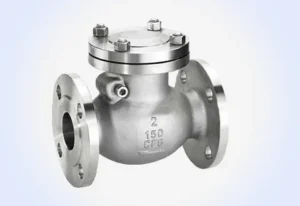
Alloy Steel Dual Plate Wafer Check Valve
Alloy Steel Dual Plate Wafer Check Valve Manufacturer, Supplier & Exporter
Alloy Steel Dual Plate Wafer Check Valves are compact, lightweight and automatically operated non-return valves designed to prevent reverse flow in industrial piping systems. The valve uses two spring-loaded plates that open under forward flow and close automatically when the flow reverses.
The wafer-style construction allows the valve to be installed between mating pipeline flanges, reducing overall weight and installation space. Alloy steel construction can be selected for applications requiring suitable mechanical strength, pressure capability and elevated-temperature performance.
These valves are widely used in oil & gas, refinery, petrochemical, chemical, fertilizer, power generation, steam and industrial process applications.
What Is an Alloy Steel Dual Plate Wafer Check Valve?
An Alloy Steel Dual Plate Wafer Check Valve is a one-way valve incorporating two semi-circular plates mounted on a central hinge or shaft arrangement. Springs assist the plates in returning toward the closed position when forward flow decreases or reverses.
The compact wafer body is installed between pipeline flanges. Unlike an actuated valve, the check valve normally requires no external operator, handwheel or actuator.
Its primary function is to protect pumps, compressors, pipelines and process equipment from unwanted reverse flow.
Alloy Steel Dual Plate Wafer Check Valve Features
Main Features
- Alloy steel body construction
- Dual spring-loaded disc/plate design
- Wafer-type compact construction
- Automatic non-return operation
- Fast closing characteristics
- Low installation weight
- Short face-to-face dimension
- Reduced installation space
- Suitable for horizontal installation and selected vertical-flow applications according to design
- Available in different pressure classes
- Suitable for manual-free automatic operation
- Metal or soft-seat configurations depending on service
- Suitable for various industrial process fluids
Alloy Steel Dual Plate Wafer Check Valve Construction
Body
The body is the primary pressure-containing component. Alloy steel or a specified alloy material can be selected according to pressure, temperature and service requirements.
Dual Plates
Two independent plates open under forward differential pressure. When the differential pressure falls, the plates move toward the closed position.
Springs
Springs assist the plates in closing quickly. Proper spring selection is important for reliable operation and acceptable pressure-drop characteristics.
Seat
The valve seat provides sealing when the plates are closed. Seat construction may be metallic or soft seated according to application requirements.
Hinge / Shaft
The hinge or shaft arrangement supports the plates and permits controlled movement during opening and closing.
Alloy Steel Dual Plate Wafer Check Valve Specifications
| Parameter | Typical Specification |
|---|---|
| Valve Type | Dual Plate Check Valve |
| Design | Wafer Type |
| Material | Alloy Steel |
| Operation | Automatic |
| Closure | Dual Spring-Loaded Plates |
| Body | Alloy Steel / Specified Material |
| Plates | Alloy Steel / Compatible Material |
| Seat | Metal / Soft Seat |
| Connection | Wafer |
| Size | As Required |
| Pressure Class | As Required |
| Installation | Horizontal / Vertical as permitted by design |
| Flow | One Direction |
| Operation | Self-Actuated by Flow |
| Service | Oil & Gas / Chemical / Power / Process |
| Testing | As per applicable standard |
Alloy Steel Dual Plate Wafer Check Valve Size Range
Typical sizes may include:
Small Sizes
- 1 inch
- 1½ inch
- 2 inch
- 2½ inch
- 3 inch
- 4 inch
Medium Sizes
- 5 inch
- 6 inch
- 8 inch
- 10 inch
- 12 inch
- 14 inch
- 16 inch
Large Sizes
- 18 inch
- 20 inch
- 24 inch
- 30 inch and larger, depending on manufacturer design
Actual available sizes depend on the selected valve series and pressure rating.
Alloy Steel Dual Plate Check Valve Pressure Ratings
Depending on design, alloy steel dual plate wafer check valves may be available in:
- Class 150
- Class 300
- Class 600
- Class 900
- Class 1500
- PN10
- PN16
- PN25
- PN40
- Other ratings subject to design
The pressure-temperature rating should always be confirmed using the manufacturer’s approved datasheet.
Alloy Steel Dual Plate Wafer Check Valve Standards
Depending on project requirements, relevant standards may include:
- API 594 – Check Valves
- ASME B16.34 – Valves
- ASME B16.5 – Pipe Flanges and Flanged Fittings
- ASME B16.10 – Face-to-Face and End-to-End Dimensions
- ISO 5752 – Face-to-Face Dimensions
- ISO 5208 – Pressure Testing of Metallic Valves
The applicable standard should be specified according to the project, service and valve design.
How Does a Dual Plate Wafer Check Valve Work?
Forward Flow
When the pressure on the inlet side becomes greater than the downstream pressure, the two plates move away from the seats and allow the process fluid to pass.
Reduced Flow
As flow velocity and differential pressure decrease, the springs begin returning the plates toward their seats.
Reverse Flow
If downstream pressure becomes greater than upstream pressure, the plates close against the seats, restricting reverse flow.
This automatic operation helps protect pumps and other equipment from backflow.
Alloy Steel Dual Plate Wafer Check Valve Applications
Oil & Gas Industry
Dual plate check valves can be used in pipelines and process systems where compact non-return protection is required.
Refinery
Refinery process and utility piping systems can use appropriately selected check valves for reverse-flow protection.
Petrochemical Plants
Alloy steel dual plate check valves can be used in selected hydrocarbon and process services.
Chemical Industry
The valve may be selected for chemical process systems when the alloy and seat materials are compatible with the process medium.
Power Plants
They can be used in water, steam and auxiliary process systems where the valve design and material rating are suitable.
Fertilizer Industry
Dual plate check valves are used in selected fertilizer process and utility services.
Pump Discharge Lines
Check valves are commonly installed downstream of pumps to help prevent reverse flow when the pump stops.
Advantages of Alloy Steel Dual Plate Wafer Check Valves
Compact Design
The wafer body requires relatively little installation space.
Lightweight Construction
The dual-plate configuration can provide a lower-weight alternative to some conventional check valve designs.
Automatic Operation
No external actuator is normally required.
Quick Closure
Spring-assisted plates can provide rapid closure as forward flow decreases.
Low Installation Space
The short face-to-face design makes these valves suitable for compact piping arrangements.
Reduced Backflow Risk
Automatic closure helps protect equipment and piping against reverse flow.
Versatile Installation
Many designs can be installed in horizontal pipelines and selected vertical-flow arrangements, subject to manufacturer instructions.
Alloy Steel Dual Plate Wafer Check Valve vs Swing Check Valve
| Feature | Dual Plate Wafer Check Valve | Swing Check Valve |
|---|---|---|
| Design | Two spring-loaded plates | Hinged disc |
| Connection | Usually wafer | Flanged / wafer / other |
| Weight | Generally compact and lightweight | Generally heavier |
| Installation Space | Short | Typically longer |
| Closure | Spring assisted | Primarily flow assisted |
| Actuator | Not normally required | Not normally required |
| Maintenance | Relatively simple | Relatively simple |
| Application | Process and industrial piping | Process and industrial piping |
The correct selection depends on flow characteristics, pressure drop, installation requirements and project specifications.
Alloy Steel Dual Plate Wafer Check Valve Materials
Material selection depends on pressure, temperature and process fluid.
Potential material requirements may include:
- Alloy steel body
- Alloy steel plates
- Alloy steel or corrosion-resistant shaft
- Stainless steel springs
- Metal seat
- PTFE or other engineered soft seat
- Corrosion-resistant internal components
The exact material grade should be specified in the approved valve datasheet rather than assumed from the general term “alloy steel.”
Alloy Steel Dual Plate Wafer Check Valve Testing
Depending on the applicable standard and customer specification, inspection and testing may include:
- Body hydrostatic pressure test
- Seat leakage test
- Low-pressure leakage test where applicable
- Visual inspection
- Dimensional inspection
- Material verification
- PMI where specified
- Functional inspection
- Final inspection
Alloy Steel Dual Plate Wafer Check Valve Documentation
Technical documents may include:
- Valve datasheet
- General arrangement drawing
- Dimensional drawing
- Material Test Certificate
- Pressure Test Certificate
- Certificate of Conformance
- Inspection & Test Plan
- PMI report where required
- Final inspection report
- Packing documentation
- Manufacturer’s operating instructions
How to Select an Alloy Steel Dual Plate Wafer Check Valve
1. Valve Size
Determine the nominal pipe diameter and required flow capacity.
2. Pressure Rating
Select the appropriate ASME Class or PN rating.
3. Operating Temperature
Confirm the temperature range and pressure-temperature rating.
4. Process Medium
Identify the fluid and evaluate material compatibility.
5. Flow Velocity
Flow velocity affects pressure drop, plate movement and valve performance.
6. Installation Orientation
Confirm whether the selected valve permits horizontal and/or vertical installation.
7. Seat Material
Select the seat according to temperature, chemical compatibility and leakage requirements.
8. Connection Standard
Confirm compatibility with the mating pipeline flanges.
Alloy Steel Dual Plate Wafer Check Valve Maintenance
Dual plate check valves generally require limited routine maintenance, but periodic inspection is recommended.
Maintenance may include:
- External visual inspection
- Checking for leakage
- Inspecting flange connections
- Checking abnormal noise or vibration
- Inspection during planned shutdowns
- Checking plates, springs and seats where accessible
- Cleaning deposits according to approved maintenance procedures
Always follow the manufacturer’s maintenance and safety instructions.
Alloy Steel Dual Plate Wafer Check Valve Supplier in India
We supply Alloy Steel Dual Plate Wafer Check Valves for industrial and process applications requiring automatic reverse-flow protection.
Our valve supply can be configured according to:
- Size
- Pressure class
- Body material
- Disc/plate material
- Seat material
- Connection standard
- Temperature
- Process medium
- Inspection requirements
Technical datasheets, dimensional drawings, material certificates and pressure-test documents can be supplied according to project requirements.
Alloy Steel Dual Plate Wafer Check Valve Exporter
Alloy steel dual plate wafer check valves can be supplied for domestic and international projects in accordance with customer technical specifications.
Export support may include:
- Technical documentation
- Commercial documentation
- Inspection reports
- Material certificates
- Pressure test certificates
- Certificates of conformity
- Export packing
- Project-specific drawings
Frequently Asked Questions
What is an Alloy Steel Dual Plate Wafer Check Valve?
It is an automatic non-return valve with two spring-loaded plates installed in a compact wafer-style body to prevent reverse flow.
Does a dual plate check valve need an actuator?
No. The valve normally operates automatically using differential pressure and internal springs.
What is the advantage of a wafer design?
The wafer configuration provides a compact valve arrangement with relatively short installation dimensions and low weight.
Where are dual plate check valves used?
They are commonly used in oil & gas, refinery, petrochemical, chemical, power, fertilizer, water and industrial process systems.
Can this valve be installed vertically?
Many designs permit vertical installation with upward flow, but the permitted orientation must be confirmed from the manufacturer’s installation instructions.
What standards are commonly used?
API 594, ASME B16.34, ASME B16.10 and ISO 5752 are among the standards commonly referenced for check valve design and dimensions, depending on the specific valve.
What information is required for a quotation?
Provide the size, pressure class, body material, plate material, seat material, process fluid, temperature, connection standard and installation orientation.
Conclusion
The Alloy Steel Dual Plate Wafer Check Valve is a compact and efficient non-return solution for industrial piping systems. Its dual spring-loaded plates, automatic operation and wafer construction make it suitable for applications where space, weight and reliable reverse-flow protection are important.
For correct selection, the pressure, temperature, process fluid, flow velocity, installation orientation, seat material and applicable valve standard should be reviewed before finalizing the valve.