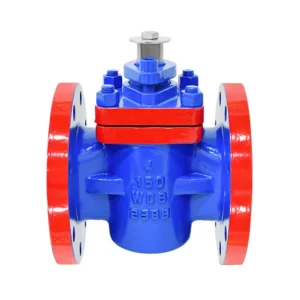
Alloy Steel Lug Butterfly Valve Manufacturer & Supplier in India
Alloy Steel Lug Butterfly Valve
Alloy Steel Lug Butterfly Valves are compact quarter-turn isolation and flow-control valves designed for demanding industrial piping systems. The lug-style body incorporates integral mounting lugs, allowing the valve to be positioned securely between pipeline flanges.
Alloy steel construction can provide the required mechanical strength and elevated-temperature capability for selected applications in oil & gas, refinery, petrochemical, chemical, power generation, fertilizer, steam and industrial process plants.
Available configurations include manual, gearbox-operated, pneumatic-actuated and electric-actuated valves, depending on size and application.
What Is an Alloy Steel Lug Butterfly Valve?
An Alloy Steel Lug Butterfly Valve is a quarter-turn valve with a circular disc mounted on a shaft. The disc rotates approximately 90 degrees to open or close the pipeline.
The valve body includes integral lugs with threaded or tapped holes. These lugs provide the mounting arrangement between the pipeline flanges.
The lug design can also allow the valve to remain supported when one side of the pipeline is disconnected, provided the specific valve is designed and rated for that installation arrangement.
Alloy Steel Lug Butterfly Valve Manufacturer
We supply Alloy Steel Lug Butterfly Valves for industrial and process applications in different:
- Sizes
- Pressure classes
- Alloy steel materials
- Disc materials
- Seat materials
- Shaft configurations
- Operating arrangements
- Connection standards
- Inspection requirements
Valves can be supplied according to customer datasheets, drawings and project specifications.
Alloy Steel Lug Butterfly Valve Features
Main Features
- Alloy steel body construction
- Lug-type mounting arrangement
- Quarter-turn operation
- Compact design
- Lightweight compared with many conventional isolation valves
- Easy installation
- Reduced installation space
- Manual lever operation
- Gearbox operation
- Pneumatic actuator option
- Electric actuator option
- Metal or resilient seat configurations
- Suitable for selected high-temperature applications
- Available in multiple pressure classes
- Suitable for industrial process applications
Alloy Steel Lug Butterfly Valve Construction
Body
The body contains the pressure and provides the main structural support. The alloy steel grade is selected according to pressure, temperature and process conditions.
Disc
The disc rotates around the shaft and controls the flow. Disc material is selected according to process-fluid compatibility and mechanical requirements.
Shaft
The shaft transfers operating torque from the handle or actuator to the disc.
Seat
The seat provides sealing between the disc and body. Depending on the application, available options may include:
- PTFE
- Reinforced PTFE
- PFA
- EPDM
- Other engineered elastomers
- Metal seat
Actual seat suitability depends on temperature, pressure and chemical compatibility.
Lug Body
The integral lugs provide the bolting arrangement for installation between mating flanges.
Alloy Steel Lug Butterfly Valve Technical Specifications
| Parameter | Typical Specification |
|---|---|
| Valve Type | Butterfly Valve |
| Body Design | Lug Type |
| Material | Alloy Steel |
| Operation | Quarter Turn |
| Body | Alloy Steel / Specified Material |
| Disc | Alloy / Stainless / Specified Material |
| Stem/Shaft | Alloy / Stainless / Specified Material |
| Seat | PTFE / Elastomer / Metal |
| Connection | Lug Type |
| Size | As Required |
| Pressure Rating | As Required |
| Operation | Lever / Gear / Pneumatic / Electric |
| Flow | Bi-directional or directional according to design |
| Service | Oil & Gas / Chemical / Power / Process |
| Testing | As per applicable standard |
Alloy Steel Lug Butterfly Valve Size Range
Depending on the valve series and manufacturer, common sizes may include:
Small Sizes
- 1″
- 1½”
- 2″
- 2½”
- 3″
- 4″
Medium Sizes
- 5″
- 6″
- 8″
- 10″
- 12″
- 14″
- 16″
Large Sizes
- 18″
- 20″
- 24″
- 30″
- 36″
- 40″ and larger, depending on design
The available size range depends on the pressure rating and valve construction.
Alloy Steel Lug Butterfly Valve Pressure Rating
Alloy steel lug butterfly valves may be supplied for various pressure classes, including:
- Class 150
- Class 300
- Class 600
- PN10
- PN16
- PN25
- PN40
- Other ratings subject to design
The allowable pressure-temperature rating must be verified from the manufacturer’s approved datasheet.
Alloy Steel Lug Butterfly Valve Types
Concentric Lug Butterfly Valve
The shaft and disc arrangement is concentric with the body. This configuration is widely used for general isolation applications.
High Performance Lug Butterfly Valve
High-performance designs can provide improved sealing and pressure capability for demanding industrial services.
Double Offset Lug Butterfly Valve
Double-offset designs reduce rubbing between the disc and seat during operation and can reduce operating torque and seat wear.
Triple Offset Butterfly Valve
Triple-offset designs use a specialized geometry to provide a cam-like seating movement and are commonly considered for demanding metal-seated applications.
Alloy Steel Lug Butterfly Valve Operating Options
Lever Operated
Lever operation is generally used for smaller valves requiring local manual operation.
Gear Operated
Gearboxes provide mechanical advantage and are commonly used for larger valve sizes or higher operating torque.
Pneumatic Actuated
Pneumatic actuators provide rapid automated operation and can be integrated with process-control systems.
Electric Actuated
Electric actuators provide remote operation where electrical actuation is preferred.
Alloy Steel Lug Butterfly Valve Applications
Oil & Gas Industry
Alloy steel lug butterfly valves can be used for selected isolation applications in oil and gas facilities.
Refinery
Refinery process and utility piping can use appropriately selected lug butterfly valves for isolation and flow management.
Petrochemical Plants
They are suitable for selected process applications where the valve material and seat construction meet the service requirements.
Chemical Industry
Alloy steel lug butterfly valves can be selected for chemical systems where material compatibility has been established.
Power Plants
Applications can include selected cooling, water, utility and process systems.
Fertilizer Plants
Lug butterfly valves can be used in selected process and utility piping applications.
Industrial Process Plants
They are widely applicable to process, air, gas, water and other industrial services when correctly specified.
Advantages of Alloy Steel Lug Butterfly Valves
Compact Construction
The butterfly valve design requires relatively little installation space.
Lug Mounting
Integral lugs provide a secure mounting arrangement between pipeline flanges.
Quarter-Turn Operation
The valve can move between open and closed positions with approximately 90 degrees of rotation.
Lightweight
Butterfly valves are generally lighter than many conventional isolation valves of comparable pipeline size.
Easy Automation
The valve can be fitted with pneumatic or electric actuators when compatible with the valve design.
Maintenance Convenience
The lug configuration can be advantageous for certain maintenance arrangements because of its independent mounting points.
Alloy Steel Lug Butterfly Valve vs Wafer Butterfly Valve
| Feature | Lug Butterfly Valve | Wafer Butterfly Valve |
|---|---|---|
| Body Type | Integral lugs | Wafer body |
| Mounting | Bolted through lugs | Sandwiched between flanges |
| Maintenance | Can offer convenient isolation arrangements depending on design | Generally requires flange support |
| Weight | Compact | Usually very compact |
| Installation Space | Low | Low |
| Operation | Quarter Turn | Quarter Turn |
| Automation | Available | Available |
| Applications | Industrial / Process | Industrial / Process |
The correct selection depends on pipeline arrangement, maintenance requirements, pressure rating and project specification.
Alloy Steel Lug Butterfly Valve Materials
The exact material combination should be selected according to service conditions.
Possible materials include:
- Alloy steel body
- Stainless steel disc
- Alloy steel or stainless steel shaft
- PTFE seat
- Reinforced PTFE seat
- PFA seat
- EPDM seat
- Metal seat
- Corrosion-resistant internal components
Material compatibility should be verified against the actual process fluid and operating temperature.
Alloy Steel Lug Butterfly Valve Standards
Depending on the design and project requirements, commonly referenced standards may include:
- API 609 – Butterfly Valves
- ASME B16.34 – Valves
- ASME B16.5 – Pipe Flanges and Flanged Fittings
- ASME B16.10 – Face-to-Face and End-to-End Dimensions
- ISO 5752 – Face-to-Face Dimensions
- ISO 5211 – Actuator Mounting
- EN 593 – Industrial Metallic Butterfly Valves
The applicable standard must be confirmed for the specific valve design.
Alloy Steel Lug Butterfly Valve Testing
Depending on the applicable standard and customer specification, testing may include:
- Body pressure test
- Seat leakage test
- Low-pressure leakage test where specified
- Functional operation test
- Visual inspection
- Dimensional inspection
- Material verification
- PMI where specified
- Actuator functional test
- Final inspection
Alloy Steel Lug Butterfly Valve Documentation
Project documentation may include:
- Technical datasheet
- General Arrangement drawing
- Dimensional drawing
- Material Test Certificate
- Pressure Test Certificate
- Certificate of Conformance
- Inspection & Test Plan
- PMI report where applicable
- Final inspection report
- Actuator datasheet
- Calibration certificates where applicable
- Operation and maintenance documentation
How to Select an Alloy Steel Lug Butterfly Valve
1. Determine Valve Size
Specify the nominal pipe diameter.
2. Determine Pressure Rating
Select the required ASME Class or PN rating.
3. Check Temperature
Operating temperature determines pressure rating and seat/material selection.
4. Identify the Process Fluid
Determine the chemical and physical characteristics of the process medium.
5. Select Body and Disc Materials
Material selection should consider corrosion, pressure and temperature.
6. Select Seat Material
Seat selection should be based on chemical compatibility and temperature.
7. Select Connection
Confirm pipeline flange dimensions and bolt-hole arrangement.
8. Select Operator
Specify lever, gearbox, pneumatic actuator or electric actuator.
Alloy Steel Lug Butterfly Valve for High Temperature Service
For elevated-temperature service, selection should consider:
- Alloy steel grade
- Disc material
- Shaft material
- Seat construction
- Packing
- Pressure-temperature rating
- Thermal expansion
- Applicable valve standard
Metal-seated high-performance or triple-offset configurations may be considered for applications where soft-seat temperature limitations are unsuitable.
Alloy Steel Lug Butterfly Valve Maintenance
Routine inspection helps maintain valve performance.
Maintenance may include:
- External visual inspection
- Checking lug bolts and flange connections
- Checking for leakage
- Inspecting stem/shaft operation
- Checking actuator operation
- Checking abnormal vibration
- Seat and disc inspection during scheduled shutdowns
- Lubrication where specified by the manufacturer
Maintenance should be carried out according to the manufacturer’s instructions.
Alloy Steel Lug Butterfly Valve Supplier in Saudi Arabia
We supply Alloy Steel Lug Butterfly Valves in India for industrial and process applications.
Our supply range can be configured according to:
- Valve size
- Pressure class
- Body material
- Disc material
- Seat material
- Shaft material
- End connection
- Operator
- Testing requirements
- Inspection requirements
We support requirements for oil & gas, refinery, petrochemical, chemical, power, fertilizer and general industrial projects.
Alloy Steel Lug Butterfly Valve Exporter
Alloy Steel Lug Butterfly Valves can be supplied for international industrial projects with project-specific technical and commercial documentation.
Export supply can include:
- Technical datasheets
- GA drawings
- Material certificates
- Pressure-test certificates
- Inspection reports
- Certificates of conformity
- Packing documentation
- Project-specific documentation
Why Choose Our Alloy Steel Lug Butterfly Valves?
We can provide valve configurations based on the actual operating conditions rather than a generic product description.
Our support includes:
- Technical valve selection
- Datasheet preparation
- GA drawings
- Material documentation
- Pressure-test documentation
- Inspection documentation
- Manual and actuated configurations
- Domestic and export supply
Frequently Asked Questions
What is an Alloy Steel Lug Butterfly Valve?
It is a quarter-turn butterfly valve with an alloy steel body and integral mounting lugs for installation between pipeline flanges.
What is the advantage of a lug butterfly valve?
The integral lugs provide a dedicated mounting arrangement and can be useful for certain pipeline isolation and maintenance configurations.
What is the difference between lug and wafer butterfly valves?
A lug valve has integral mounting lugs, while a wafer valve is generally held between the mating pipeline flanges.
Can an alloy steel lug butterfly valve be automated?
Yes. Depending on valve size and design, pneumatic and electric actuators can be installed.
Are alloy steel lug butterfly valves suitable for high temperatures?
Selected designs can be used for elevated-temperature applications, but the body, disc, seat, shaft and pressure-temperature rating must all be verified.
What standards apply to lug butterfly valves?
API 609, ASME B16.34, ASME B16.10, ISO 5752 and ISO 5211 are among commonly referenced standards, depending on the valve design.
What information is required for a quotation?
Provide the valve size, pressure class, process fluid, temperature, body material, disc material, seat material, flange standard and operating arrangement.
Conclusion
Alloy Steel Lug Butterfly Valves offer a compact and versatile solution for industrial pipeline isolation and flow-management applications. Their integral lug construction, quarter-turn operation and availability with different seat, disc and actuator configurations make them suitable for many demanding process systems.
For correct selection, always verify the material grade, pressure-temperature rating, seat compatibility, flange dimensions, operating torque and applicable valve standard against the approved project specification.